




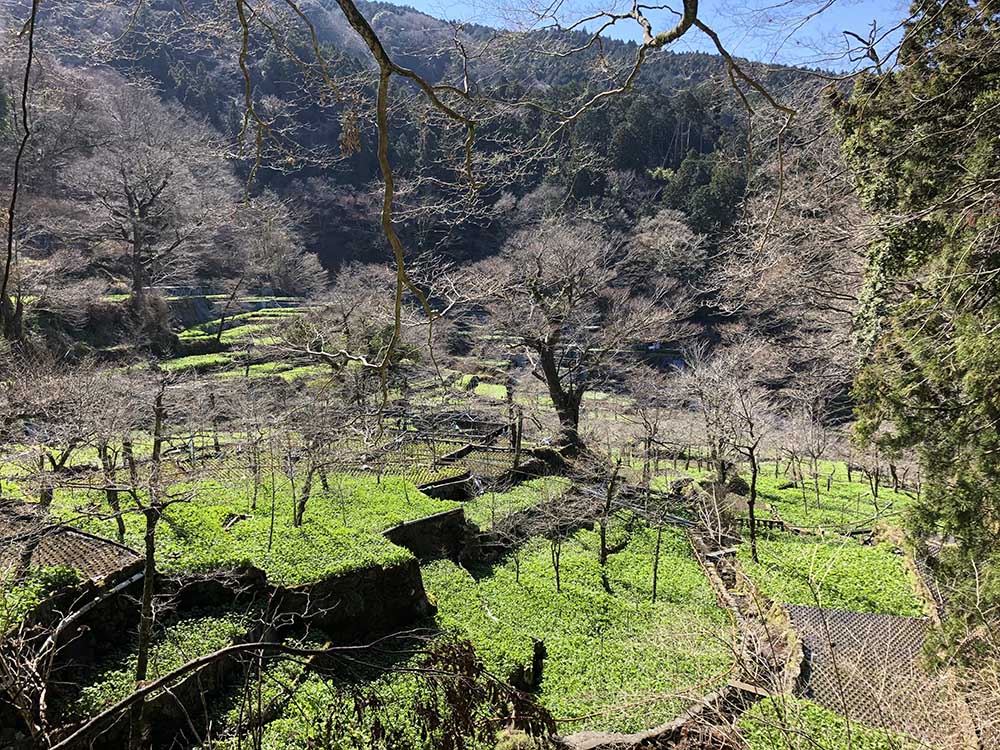
Wasabi can take two years to reach maturity in the UK. This and the growing market for fresh wasabi in Europe means we are not always able to keep pace with sales from our own farms. In 2017 we turned to the obvious place for the solution, we now have a reliable supply of the highest quality wasabi from Japan to support our UK production.
Our Japanese wasabi is wholly sourced from farms in Shizuoka prefecture, in particular the Amagi area which is renowned for high quality wasabi. Our guides to the best wasabi, and wasabi famers, are Yoshiharu san and his father Takahashi san. Takahashi san has over 50 years’ experience sourcing wasabi from all over Japan for the top restaurants in Tokyo. It was his recommendation that led us to visit several renowned wasabi farmers in Shizuoka.

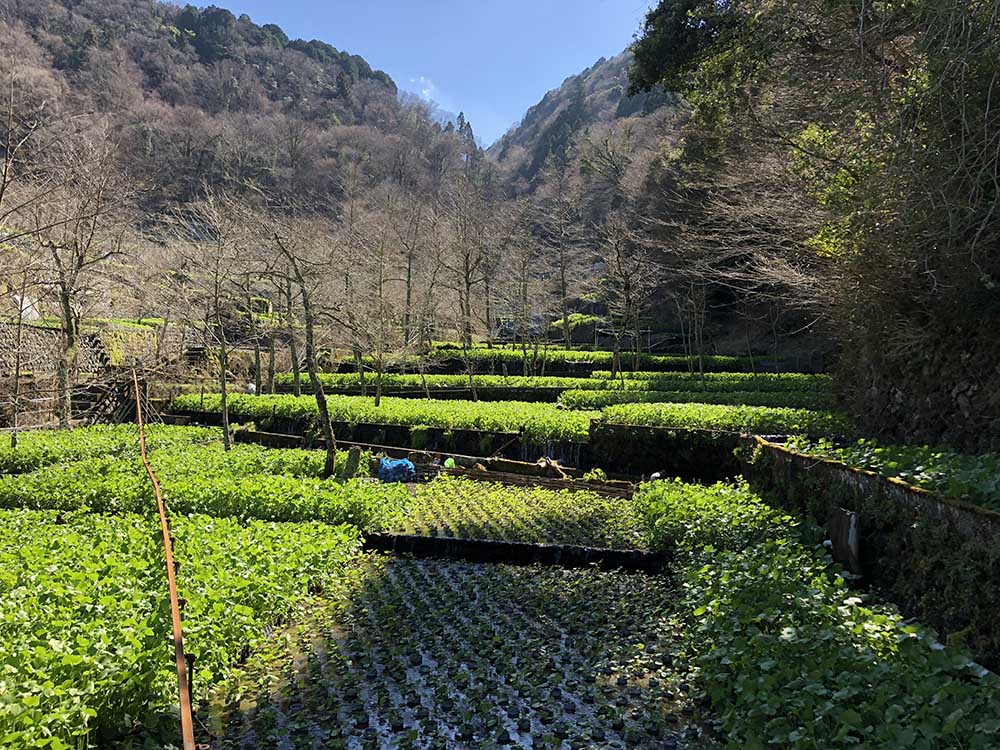
Many different varieties of wasabi are farmed in the area, some are particular to individual growers. The Isewan typhoon of 1959 flooded Amagi with such devastating effect that all wasabi varieties were washed away. Mazuma wasabi from Wakayama was re-planted and much of the wasabi grown in the area now is derived from this variety.
Most growers of the best wasabi in Japan are small family businesses, this combined with wasabi’s long production cycle of at least 18 months means Yoshiharu san will source our wasabi from various growers throughout the year. This ensures a continuous supply of the highest quality wasabi.
Market prices fluctuate during the year, festival periods combined with a poor weather event can see prices almost double. We do our best to manage these periods by having our own UK grown wasabi available at these times. Balancing supply from UK and Japan we are able to guarantee year-round availability of high quality, fresh wasabi.

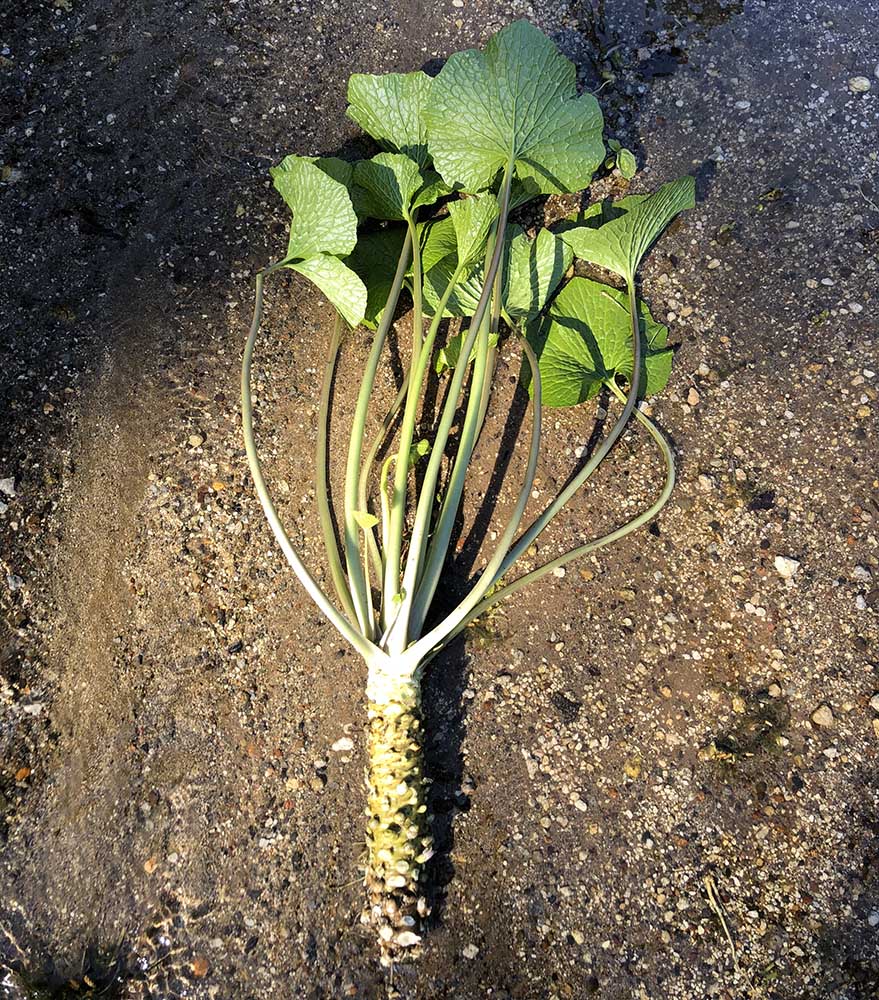
English wasabi plants generally yield less wasabi and smaller stem sizes than Japanese wasabi: our conditions are less optimal and we have approximately 10,000 years less experience in growing wasabi!
English wasabi does however hold all of the same flavour characteristics and has been favourably reviewed in taste tests by both Japanese farmers and chefs with many years’ experience of using fresh wasabi every day.
Different production areas, varieties and times of year can all effect the flavour and pungency of wasabi, flowering has a notorious ability to decrease pungency and sweetness as energy is focused on the rapid growth of flowers and their long stems. Your feedback is encouraged and welcomed as we seek to provide you with the very best fresh wasabi experience every day, throughout the year.
Balancing supply from UK and Japan we are able to guarantee year-round availability of high quality, fresh wasabi.


One of our visits took us to the Yamaguchi family farm. The Yamaguchi family has a long history of growing wasabi. Today, the farm is run by Motokazu Yamaguchi, a fifth-generation wasabi grower. Although the family had been growing wasabi for many years, it was Motokazu-san’s father who established the farm’s full-scale production. Motokazu-san has since developed and refined the cultivation methods used today.
The family’s wasabi fields, known as wasabisawa, cover around 750 tsubo (approximately 2,500 square metres). The fields are supplied by exceptionally clean spring water, which is essential for growing high-quality wasabi. Although there is potential to expand, suitable water sources are limited, and maintaining the same level of care and quality over a larger area would be difficult. For this reason, the farm has remained at its current size.
The ideal water temperature for wasabi is between 12°C and 14°C. The best water is found slightly downstream from the spring, where it has naturally mixed with air. Rising temperatures in recent years have made it increasingly challenging to maintain these conditions. The fields are divided into upper, middle and lower sections, each with slightly different growing conditions.
Motokazu-san grows a unique variety of wasabi that he has developed himself. Plants are first propagated using mericlone techniques to maintain consistent quality and characteristics. Seeds are then collected from these plants, germinated in the field and carefully transplanted into the wasabisawa.
This approach produces seedlings with remarkably consistent characteristics, including the thickness and shape of the rhizome. Wasabi grown from naturally produced seed can be much more variable.
Motokazu-san often says: “I can give you my seedlings, but you will never be able to grow the same wasabi.”
His words reflect the importance of the local environment, as well as the knowledge, experience and skill that have been developed over generations of growing wasabi.