



Kombu

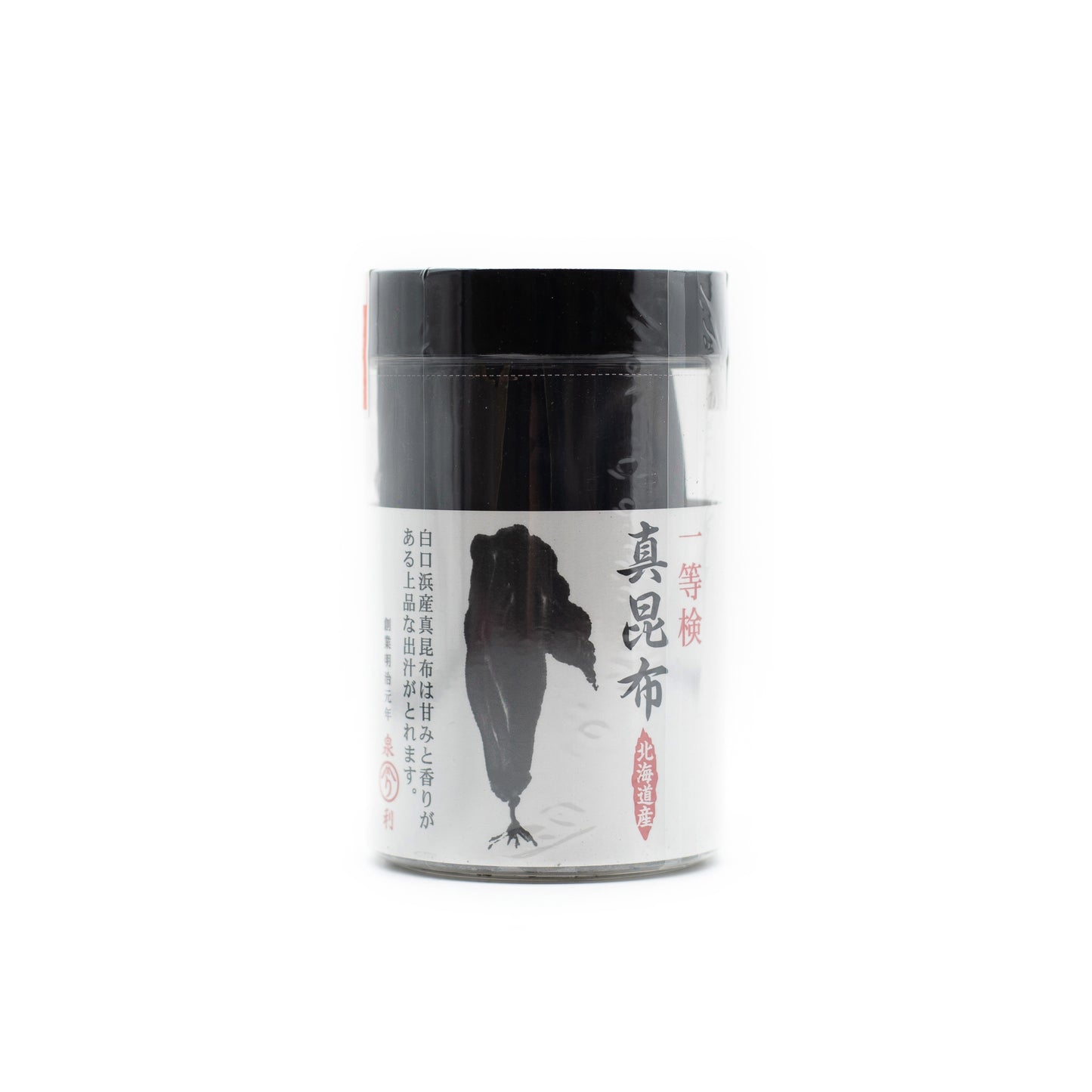


What is kombu and how is it used in Japanese cooking?
Kombu is an edible kelp harvested mostly around Hokkaido, where cold water and long growing seasons produce thick, flavourful fronds. Once cut, it’s dried, pressed and sometimes aged so the taste deepens and concentrates.
What makes kombu kelp distinctive is its glutamate content. In 1908, Japanese chemist Kikunae Ikeda was studying why kombu dashi tasted so satisfying. He isolated glutamic acid as the compound responsible and named the sensation umami – a fifth taste alongside sweet, sour, salty and bitter. Kombu remains one of the richest natural sources of glutamate, which is why a single strip can turn plain water into stock with genuine depth.
The white powdery coating you’ll often see on dried kombu is mannitol, a natural sugar. It carries flavour and should be left on. Wipe the surface lightly with a damp cloth if needed, but don’t wash it under running water – you’d rinse away the very thing that gives the kelp its taste.
Types of kombu
Several varieties of Japanese kombu are harvested in Hokkaido, each with a different character. They’re broadly interchangeable for home cooking, but choosing the right one for a specific dish can make a noticeable difference.
Rishiri kombu produces a clear, refined dashi with a clean savoury edge and very little colour. It’s prized in Kyoto-style cooking where the broth needs to be transparent and understated, letting other ingredients speak. We stock Rishiri wild kombu harvested from open water.
Ma kombu is the most widely used variety. Thick, wide and light brown, it yields a slightly sweet, full-bodied broth and is versatile enough for dashi, simmered dishes, hot pot and tsukudani (kelp simmered in soy sauce and mirin). Our Ma kombu is available in large sheets, useful for making stock in volume or wrapping ingredients before cooking.
Hidaka kombu is softer in texture and cooks down more easily than other varieties, which makes it a good choice if you want to eat the kelp itself – in oden, simmered dishes, or sliced into salads. Its broth is milder and slightly sweeter.
Rausu kombu is thin, wide, and delivers an intensely flavoured, amber-coloured broth. It’s often used in hot pot and richer stock applications where subtlety matters less than depth.


Award Winning


Sustainable


Growers


Free Delivery
Get inspired with some recipes


Chicken Zosui (Japanese Rice Soup) Recipe
This Ultimate Chicken Zosui recipe is a comforting rice soup made with tender chicken thighs and fresh vegetables served in...


Quick Stir Fried Soba Noodles With Vegetables Recipe
Make your own delicious and quick stir fried soba noodles and add all your favourite toppings!


Pickled Wasabi with Soy Sauce Recipe
Make your own pickled wasabi at home. Kizami wasabi shoyu is a great way to enjoy wasabi in a different...


Creamy Hojicha Ice Cream (Japanese Roasted Green Tea) Recipe
This creamy, custard-based ice cream recipe by Yuto from Sudachi is flavoured with the toasty depth of roasted Japanese hojicha tea.


Mirin Glazed Salmon Recipe
This must be the fastest way there is to create a culinary sensation. You do scarcely a thing — just dibble some salmon steaks in a dark glossy potion, most of which you get out of a jar — and what you make tastes as if you had been dedicating half your life to achieving the perfect combination of sweet, savoury, tender and crisp.


Homemade Teriyaki Sauce Recipe
Traditionally used in Japan to glaze and flavour fish, teriyaki sauce is wonderfully versatile. Try this classic four-ingredient base recipe, ready for you to put your own spin on.