





Most people assume sushi means raw fish. It doesn’t. The word sushi refers to the rice – short-grain rice seasoned with vinegar, sugar and salt – and everything built around it. A piece of sushi might include raw fish, cooked prawn, omelette, pickled vegetables or nothing but cucumber. What is always present is the rice.
Seasoned rice is what ties together every style of sushi, from a single piece of nigiri to a seaweed-wrapped maki roll to a scattered bowl of chirashi. Get the rice right and you have the foundation. Get it wrong and no amount of expensive fish will save it. In Japan, sushi chefs spend years learning to prepare rice before they’re trusted to handle the fish.
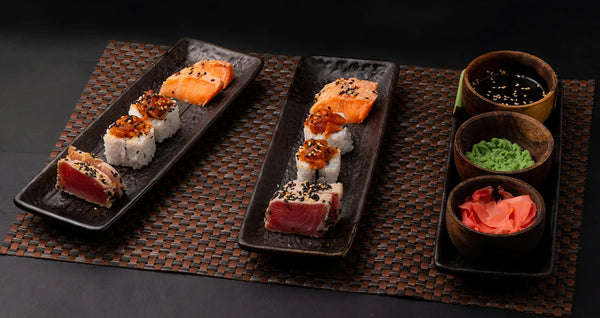
Where did sushi come from?
So, is sushi Japanese or Chinese? The earliest versions appeared in Southeast Asia and spread through China before reaching Japan around the 8th century. But what we recognise as sushi today – vinegared rice eaten together with fresh toppings – was developed entirely in Japan.
By the 15th and 16th centuries, Japanese cooks had shortened the fermentation time and started eating the rice alongside the fish. Then came a bigger shift: rice vinegar replaced fermentation altogether. Instead of waiting months, cooks could splash vinegar on freshly cooked rice and serve it the same day. This faster style, called haya-zushi, appeared during the Edo period (1603–1867).
The credit for who invented sushi in its modern form usually goes to a food seller in Edo (now Tokyo). In the 1820s, Hanaya Yohei started pressing vinegared rice by hand into small mounds and draping fresh fish over the top. That was the birth of nigiri-zushi – hand-formed sushi – and it caught on fast in a city with plentiful seafood and a taste for quick, affordable street food.
Types of sushi
There are more styles of sushi than most people realise. Each has a different shape, a different balance of rice to filling, and a different way of eating it.
- Nigiri is the most recognisable form: an oval pad of rice, shaped by hand, with a slice of fish or seafood draped over the top. There’s usually a thin smear of wasabi between rice and topping. Eaten in one bite, fish-side down, so the topping touches the tongue first.
- Maki means ‘roll.’ A sheet of nori seaweed is spread with rice and fillings, then rolled into a cylinder with a bamboo mat and sliced into pieces. This is the sushi most people picture. Fillings range from a single ingredient (tuna, cucumber) to combinations of fish, avocado and vegetables.
- Hosomaki is a thin maki roll with a single filling. Small enough to eat in one bite. Futomaki is the opposite – a thick roll with several fillings, sliced into larger rounds.
- Uramaki is an inside-out roll: rice on the outside, nori on the inside. This style was popularised in the United States (the California roll is an uramaki) and is less common in traditional Japanese sushi restaurants.
- Temaki is a hand roll – a cone of nori filled with rice, fish and other ingredients. It’s informal, easy to make at home and meant to be eaten straight away before the nori softens. No rolling mat needed.
- Chirashi means ‘scattered.’ A bowl of sushi rice topped with an assortment of sashimi slices, pickles and garnishes. It’s colourful, relatively easy to prepare and popular for celebrations in Japan.
- Inari is seasoned sushi rice stuffed into a pocket of sweet, deep-fried tofu skin. No fish involved – it’s naturally vegetarian and has a slightly sweet, savoury flavour.
- Gunkan maki (‘battleship sushi’) is an oval of rice wrapped in a strip of nori with a well on top, filled with soft toppings like fish roe, sea urchin or finely chopped tuna that would slide off a piece of nigiri.
What is sushi made of?
The rice is the most important ingredient. Sushi rice is short-grain Japanese rice, cooked and then dressed while still warm with a mixture of rice vinegar, sugar and salt. Done well, the grains hold together without clumping – slightly glossy, slightly sticky, with a clean vinegar tang underneath. It should still be faintly warm when served. Cold, stiff rice is a giveaway that something’s been sitting too long.
Nori – dried, roasted seaweed sheets – wraps most maki rolls and temaki cones. Good nori is dark, crisp and snaps cleanly when you bite through it. It should smell faintly of the sea, not stale. If you’ve ever had a roll where the seaweed was tough and chewy, the nori was probably low grade or had been open too long.

Fish and seafood vary depending on the style of sushi. Salmon, tuna and yellowtail are common for nigiri and sashimi. Prawn (usually cooked), eel (grilled), mackerel (cured in vinegar and salt) and squid also appear regularly. Raw fish used in sushi should be sushi-grade – handled and stored specifically for raw consumption.
But sushi doesn’t require fish at all. Vegetarian options are part of the tradition. Inari is made with tofu. Cucumber maki (kappa maki) is one of the most common rolls in Japan. Pickled daikon, shiitake mushroom, omelette (tamagoyaki) and avocado are all used as fillings or toppings.
Accompaniments round out the plate: soy sauce for dipping, pickled ginger (gari) to cleanse the palate between pieces, and wasabi – ideally the real thing, freshly grated from the stem, which has a fragrant heat that clears quickly rather than the sharp, lingering burn of the horseradish-based paste.
Sushi vs sashimi
Sashimi is thinly sliced raw fish or seafood, served on its own. No rice. The two are often listed together on menus, but sashimi is technically a separate dish. If it has seasoned rice, it’s sushi. If it’s purely sliced fish with soy sauce and wasabi on the side, that’s sashimi.
How to make sushi at home
Making sushi at home is simpler than it looks. The key is getting the rice right – after that, rolling and shaping are just practice.
Start with sushi rice. Rinse the rice thoroughly until the water runs clear, then cook it according to the packet instructions. While the rice is still hot, transfer it to a wide bowl or tray (a wooden hangiri is traditional) and fold through your seasoning: rice vinegar, sugar and salt, mixed together until dissolved. Fan the rice as you fold to cool it and give it a slight sheen. Don’t mash it – you want separate, glossy grains, not a paste.

For a maki roll, lay a sheet of nori on a bamboo rolling mat, shiny side down. Spread a thin, even layer of rice over the nori, leaving a centimetre strip bare along the top edge. Lay your fillings in a line across the centre – fish, cucumber, avocado, whatever you like. Roll the mat forward firmly, using your fingers to hold the fillings in place, and press gently to seal. Wet the bare strip of nori to stick the roll closed. Slice with a sharp, damp knife into six or eight pieces.
Temaki (hand rolls) are even easier. Hold a piece of nori in your palm, add a spoonful of rice and your chosen fillings, and roll it into a cone. Eat it immediately – the nori goes soft within a few minutes.
Serve with soy sauce, pickled ginger and wasabi. If you want to try the real thing, freshly grated wasabi has a completely different character from the tube paste – fragrant, warm and short-lived rather than sharp and sinus-clearing.

Authentic Japanese sushi vs Western sushi
Seen cream cheese in a sushi roll? That’s a Western invention. Traditional Japanese sushi keeps things simple: quality rice, fresh fish, clean flavours. The craft is in the balance between rice and topping, the precision of the cut, and the seasoning of the rice itself.
In Japan, nigiri is the benchmark. A sushi chef’s skill shows in how the rice holds together without being compressed, and in how each slice of fish is cut to suit its texture. Omakase – where the chef chooses what to serve – is the traditional way to eat at a sushi counter.
Western sushi tends toward larger, busier rolls with multiple fillings, sauces and garnishes. Neither style is wrong, but they’re different experiences. If you’re making sushi at home for the first time, starting with a few simple nigiri or a classic cucumber maki will give you a better feel for how the ingredients work together than a loaded uramaki with six fillings.
Making sushi with authentic Japanese ingredients
The ingredients make the difference. We stock everything you need to make sushi at home, from the basics to the finishing touches: sushi rice, rice vinegar and sushi vinegar, nori sheets in several grades (from everyday hosomaki nori to premium futomaki sheets), sushi ginger, soy sauce and ponzu for dipping, bamboo rolling mats, and sushi gift sets for anyone starting out.
Our sushi starter sets bring the essentials together in one box – a good option if you’re new to sushi-making or looking for a gift. You don’t need raw fish to get started: egg, tofu, cucumber, avocado and pickled vegetables all work well.
For anyone who wants to go deeper, Sushi At Home by Yuki Gomi is a clear, well-illustrated guide to making sushi at home. Hashi by Reiko Hashimoto covers sushi alongside the wider Japanese kitchen.