





What is umami?
Commonly translated as "pleasant savoury taste" from Japanese, umami is often described as the fifth basic taste alongside sweet, salty, sour and bitter.
Unlike sweetness or acidity, the taste of umami can be difficult to identify at first. It's the rich, satisfying flavour found in foods such as mushrooms, aged cheeses, tomatoes, cured meats, seaweed and dashi stock – giving these foods depth, roundness and a lingering savoury character that makes them feel more complete.
The concept of umami was first identified by Japanese scientist Kikunae Ikeda in 1908, who discovered that glutamate was responsible for the distinctive savoury flavour found in kombu seaweed. Examples of umami seasoning in other food cultures might include Worcestershire sauce, oyster sauce, tomato paste, malt vinegar or fish sauce (often activated with lemon juice). However, an umami substance in Japanese cooking is often more delicate and complex.
Soy sauce, miso paste, shiitake mushrooms, kombu and katsuobushi are just a few Japanese umami-packed ingredients you can use to create rich flavour.

What taste is umami?
Unlike sweet, sour, salty or bitter flavours, umami doesn't have an obvious direct comparison. Instead, it's often experienced as a deep, savoury richness that provides a satisfying depth to foods and enhances other flavours in a dish.
The taste of umami is frequently described as:
- Savoury
- Brothy
- Meaty
- Rich
- Mouth-filling
- Lingering
This meaty flavour is produced by the presence of glutamates, such as monosodium glutamate (MSG), which are commonly found in high-protein foods, broth or fermented products. It’s a complex taste that lingers on your taste buds, enhancing the overall gastronomic experience by rounding out the flavours and leaving a long-lasting savoury taste.
Umami is not only prevalent in meat but also in plant-based sources like tomatoes, mushrooms and aged cheeses like parmesan, making it a versatile taste that can be enjoyed across various cuisines and dietary preferences.
Examples of Japanese foods with high umami
Many everyday ingredients contain naturally high levels of umami compounds such as glutamate, inosinate and guanylate. Some of the best-known foods with high umami include:
- Kombu seaweed
- Dried shiitake mushrooms
- Bonito flakes
- Miso
- Soy sauce
- Parmesan cheese
- Tomatoes
- Anchovies
- Cured meats
- Kimchi
- Fish sauce
Japanese cuisine masterfully capitalises on umami-rich ingredients to create deeply satisfying dishes. Traditional foods such as sushi and sashimi rely on the natural umami present in fresh fish, and staples like ramen and miso soup get their rich, savoury depth from katsuobushi (dried bonito flakes) and fermented miso paste.
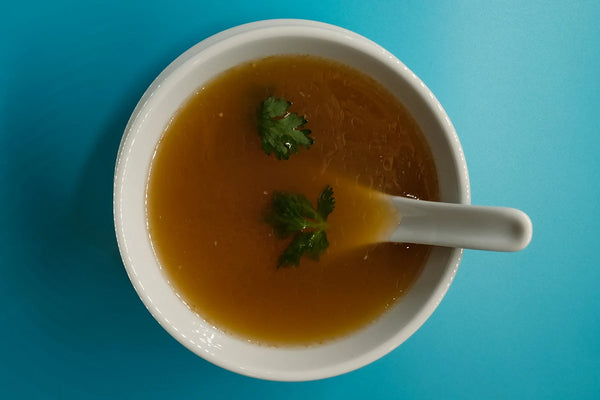
Another cornerstone of umami foods is dashi, a stock made from kombu (dried kelp) and katsuobushi, which forms the base for many Japanese soups, stews and sauces. Additionally, grilled items like yakitori (grilled chicken skewers) and yakiniku (Japanese barbecue) feature a caramelisation of meats that reveals their inherent umami.
The strongest umami flavours often occur when multiple umami compounds are combined. For example, glutamates from kombu seaweed interact with inosinate from bonito flakes to create a significantly more intense savoury flavour than either ingredient would provide on its own. This phenomenon explains why traditional Japanese dashi delivers such remarkable depth despite containing relatively few ingredients.
You can explore many of these ingredients in our collections of Japanese pantry essentials, dashi ingredients, miso and soy sauces.
Buy authentic Japanese umami-boosting ingredients at The Wasabi Company!
Our extensive range of Japanese umami boosters – including soy sauces, miso, dashi, kombu seaweed and katsuobushi – are an incredible shortcut to add deep savoury flavour to meat dishes, stir-fries, soups and more.
In our collection, we have various types of umami sauces and authentic ingredients, from premium soy sauces made with centuries-old soy sauce production methods, to yuzu ponzu: a savoury-tart rice vinegar, used as a dipping sauce.
Want to learn more about Japanese cuisine and level up your cooking skills? Check out our journal for helpful articles just like this, or browse our recipes for plenty of cooking inspiration.